Venomous Snakes in the Philippines: What 26,139 Sightings Show
Sixteen venomous species appear in the Snakédex sighting record for the Philippines, out of 66 species recorded across all 81 provinces. Of the 26,139 sightings identified to a confirmed species, 6,239 are of highly venomous snakes and 451 of venomous ones, roughly a quarter of the total. The two Philippine cobras dominate that share: Naja philippinensis with 3,180 sightings in the north and Naja samarensis with 1,834 in the south. The other 15,219 confirmed sightings are of non-venomous snakes.
How many venomous snakes the Philippines actually has
The Snakédex record holds 49,830 sightings from all 81 provinces, covering 66 species. Sixteen of those are venomous: ten highly venomous, six venomous.
Thirteen of the sixteen are elapids, the family that includes cobras, coral snakes and sea kraits. The remaining three are pit vipers: the North Philippine Temple Pit Viper (Tropidolaemus subannulatus), the Philippine Pit Viper (Trimeresurus flavomaculatus), and the Batanes Pit Viper (Trimeresurus mcgregori), which appears exactly once in the entire record.
What share of sightings are venomous
Of the 26,139 sightings identified to a confirmed species:
- 15,219 non-venomous
- 4,230 mildly venomous
- 6,239 highly venomous
- 451 venomous
So about a quarter of confirmed identifications fall in the two venomous classes. Three out of four snakes people photograph in the Philippines are not a serious threat.
The ratio comes with a caveat: this is a record of what people photographed and submitted, not a population survey. A cobra in a rice field gets photographed and reported far more reliably than a small brown snake in leaf litter, and both get reported far more often near towns than deep in forest. The counts reflect where people live and look as much as where snakes live.
The two cobras, north and south
Two species account for most of the venomous sightings, and they split the country between them.
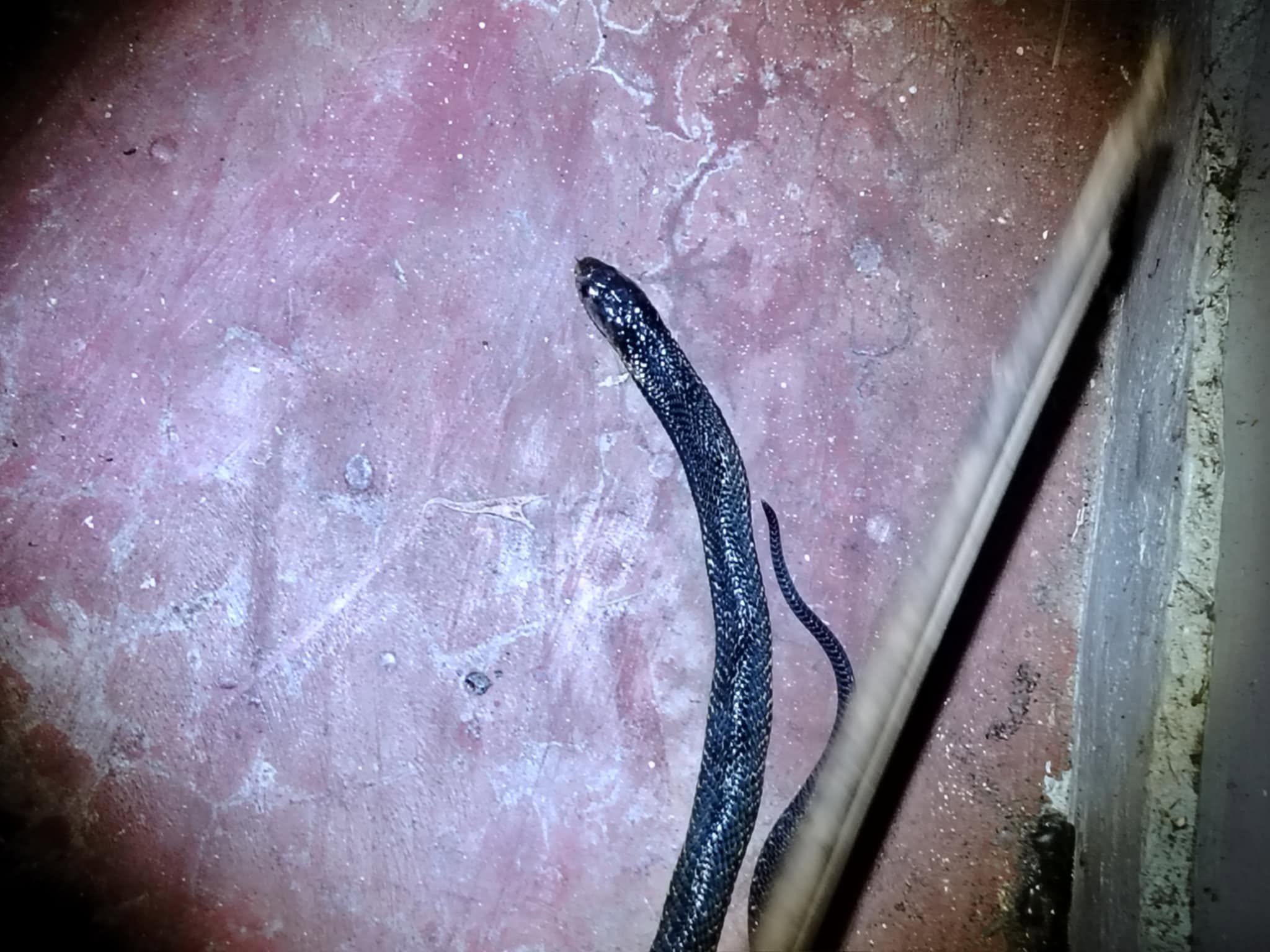
Northern Philippine Cobra (Naja philippinensis), 3,180 sightings, the most-recorded venomous snake in the country. Endemic to the Philippines. Its top provinces are Pangasinan (314), Nueva Ecija (277), Cavite (227), Bulacan (199) and Isabela (189): the farmland belt of central and northern Luzon, where rice paddies, rodents and people overlap.
Southern Philippine Cobra (Naja samarensis), 1,834 sightings, also endemic. Its range is the mirror image: Samar (207), Davao del Sur (196), Leyte (195), Bohol (119) and South Cotabato (100).
In Luzon, the cobra you are looking at is almost certainly the northern species. In the Visayas and Mindanao, the southern one.
King cobras and the Palawan outliers
Three king cobra entries appear in the record. The Luzon King Cobra (Ophiophagus salvatana) has 638 sightings, most in Benguet (107). Records still filed under the older catch-all Ophiophagus sp. number 471, led by Cebu (115). The Sunda King Cobra (Ophiophagus bungarus) has 38, concentrated in Palawan (24) and Mindoro.
Palawan also holds every one of the 62 Equatorial Spitting Cobra (Naja sumatrana) sightings in the record, all 62, no other province. Palawan sits on its own continental shelf, biologically closer to Borneo than to the rest of the country, and its snake list shows it.
Coral snakes, vipers and sea snakes
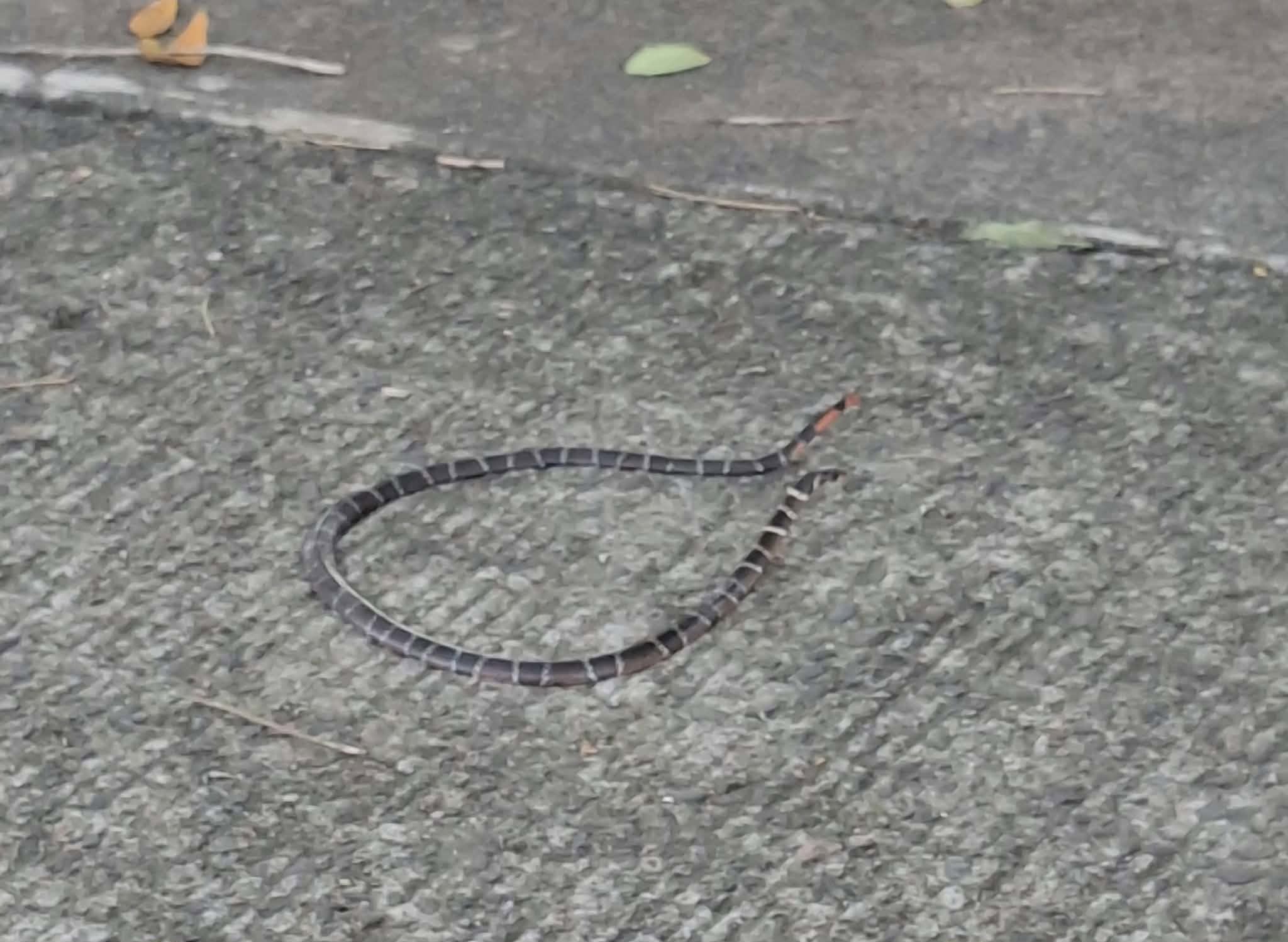
The remaining venomous species are all uncommon in the record:
- Philippine Barred Coral Snake (Hemibungarus calligaster), 146
sightings, most in Cavite, Laguna and Rizal.
- North Philippine Temple Pit Viper (Tropidolaemus subannulatus), 127,
led by Davao del Sur.
- Philippine Pit Viper (Trimeresurus flavomaculatus), 122, led by
Benguet.
- Philippine False Coral Snake (Hemibungarus gemianulis), 45, mostly
Cebu and Negros.
- Banded Sea Krait (Laticauda colubrina), 11, scattered across coastal
provinces.
Below that the numbers thin to single figures: Hemibungarus mcclungi (8), Laticauda laticaudata (5), and one sighting each of Calliophis philippina, Hydrophis cyanocinctus and Trimeresurus mcgregori. Species this rare in the record are the ones most likely to be misidentified.
If you meet one
Back away and leave it alone. Snakes do not chase people, and nearly every bite happens when someone tries to handle, catch or kill the animal.
If you want it identified, photograph it from a distance you would be comfortable standing at anyway, and submit the photo. If someone is bitten, that is a medical emergency: go to a hospital immediately rather than waiting to see whether symptoms appear.
You can browse every one of these sightings province by province on the Snakédex map, or test how well you can tell a cobra from a wolf snake in Who's That Snake?.