Snakes in Cavite: Every Species in the Sighting Record
Snakédex has logged 3,145 snake sightings in Cavite, more than any other province, with 1,920 verified to a species across 26 different kinds. The most reported is the non-venomous Common Wolf Snake (Lycodon capucinus) with 787 sightings, followed by the endemic Luzon Brown Ratsnake (309) and the highly venomous Northern Philippine Cobra, Naja philippinensis (227). Of verified Cavite sightings, about 72% are non-venomous, 14% highly venomous, 12% mildly venomous, and 2% venomous, a group that includes the Philippine Barred Coral Snake.
Cavite has the most reported snakes of any province
Cavite tops the Snakédex sighting count with 3,145 submissions, more than any other province on record. Of those, 1,920 have been verified to a specific species, and between them they cover 26 different kinds of snake, a wide spread for a single province.
That is a big number, but it comes from a community photo archive, not a wildlife census. Cavite is one of the most densely populated provinces near Metro Manila, with a lot of subdivisions built right against farmland, creeks, and scrub. More people living that close to snake habitat means more phones pointed at more snakes, which is most of why the count is this high.
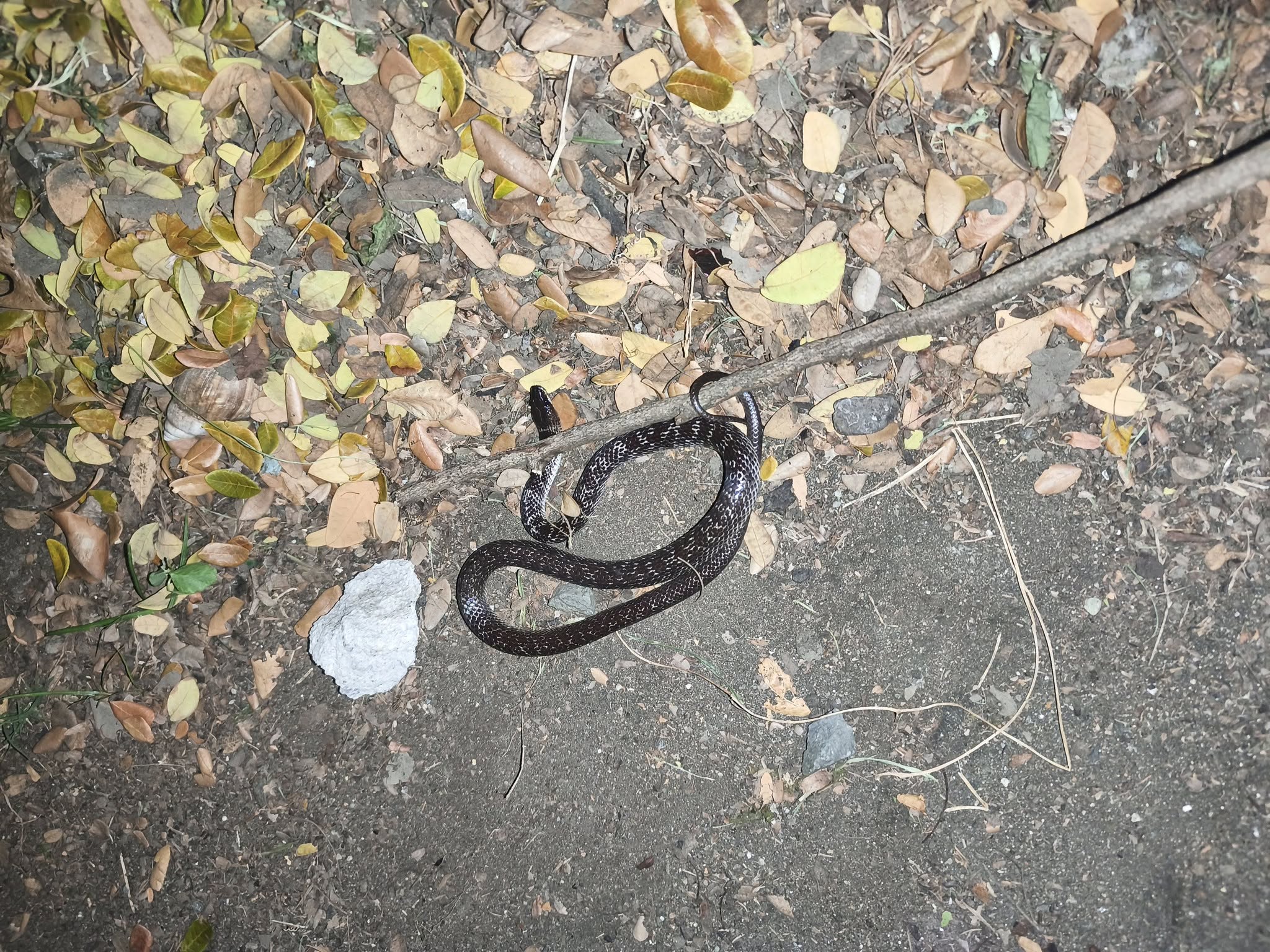
The Common Wolf Snake dominates the record
One species accounts for a huge share of everything logged in Cavite: the Common Wolf Snake, Lycodon capucinus, with 787 verified sightings, well over a third of every verified record in the province. It is non-venomous, a generalist that turns up in gardens, wall gaps, and under debris, and it is often mistaken for a young cobra because of its dark, glossy body.
Behind it comes the Luzon Brown Ratsnake, Coelognathus erythrurus manillensis, with 309 sightings and endemic to the Philippines, then the Northern Philippine Cobra, Naja philippinensis, at 227, and the Paradise Tree Snake, Chrysopelea paradisi, at 173. Together those four species make up about 78% of every verified sighting in Cavite. The other 22 species on the list share the remaining fifth between them, several with fewer than 20 sightings each.
The two highly venomous cobras recorded in the province
Cavite's highly venomous sightings, 277 of the 1,920 verified total, come mostly from two elapids. The Northern Philippine Cobra leads with 227 sightings and is endemic to the Philippines, found mainly across Luzon. Much rarer in the record is the Luzon King Cobra, Ophiophagus salvatana, also endemic, with 43 sightings.
Both species belong to family Elapidae, front-fanged snakes with venom that affects the nervous system. A cobra that feels cornered will raise its foreparts and spread a hood as a warning before it does anything else. A suspected bite from either species is a medical emergency and needs immediate hospital care right away, not first aid at home.
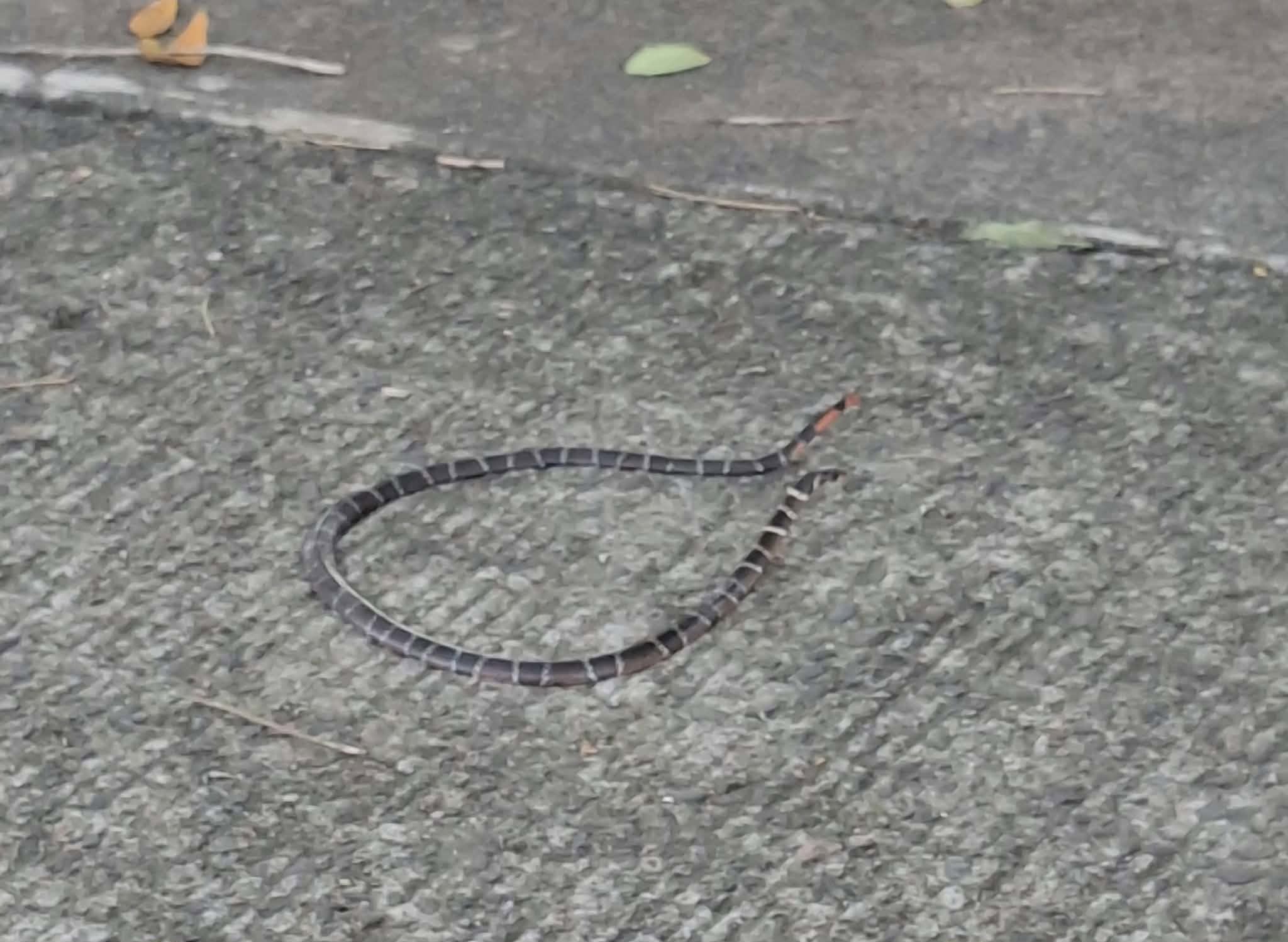
Other venomous and mildly venomous species on the list
Cavite's record also includes 37 sightings classed as venomous rather than highly venomous, a group led by the Philippine Barred Coral Snake, Hemibungarus calligaster, endemic and elapid, with 31 sightings on its own. Coral snakes are secretive, spend most of their time underground or under cover, and are rarely seen out in the open compared to the cobras.
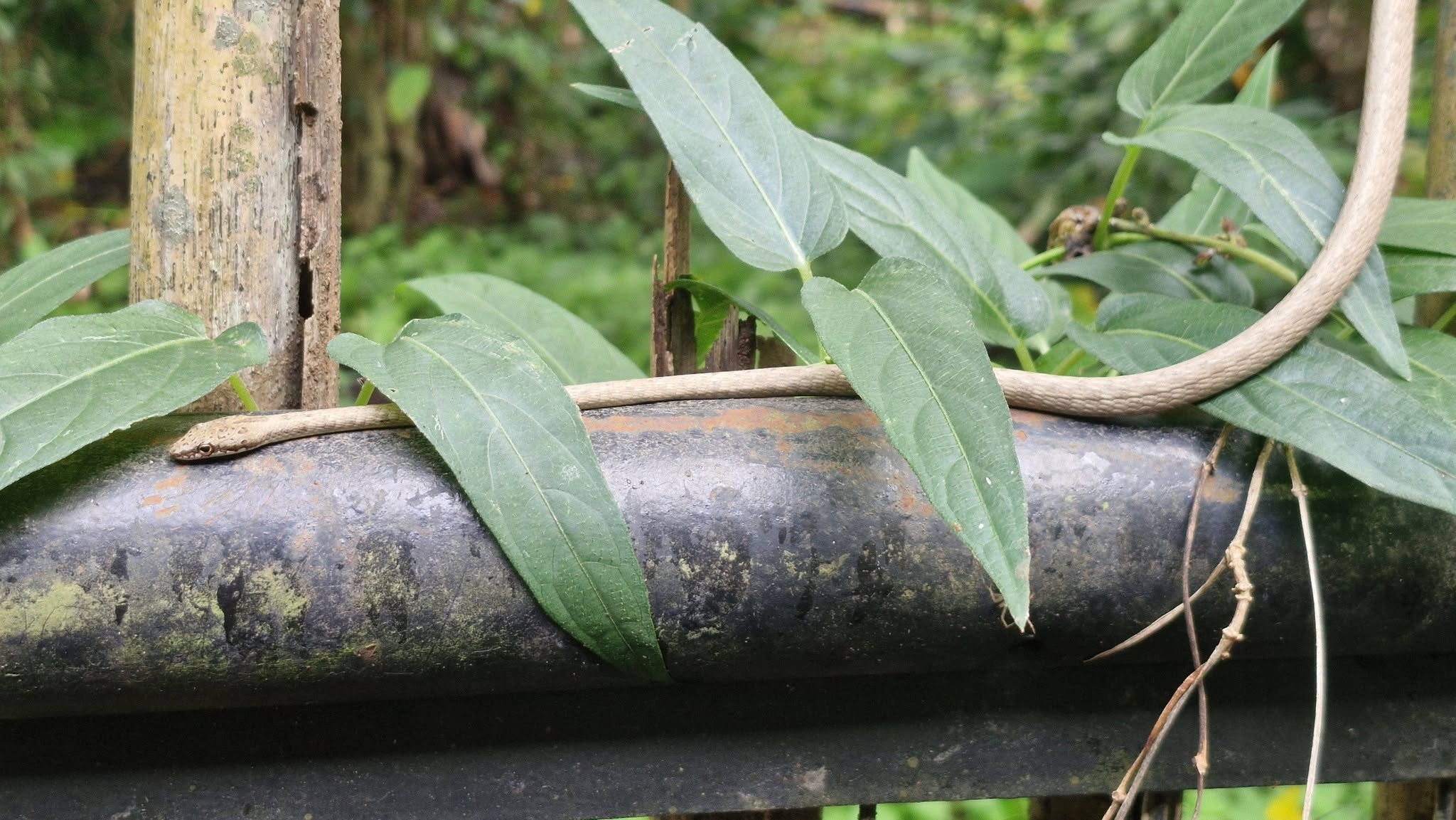
The mildly venomous category, 227 sightings, is led by the Paradise Tree Snake at 173, a rear-fanged glider that can flatten its body to move between trees. Smaller counts go to the Philippine Whip Snake, Dryophiops philippina, endemic with 19 sightings, and the Dog-toothed Cat Snake, Boiga cynodon, with 17. Both rely on stillness and camouflage rather than retreat, which is part of why they turn up in photos at all: people walk right past them and only notice once the snake has already been spotted.
What these numbers do, and do not, tell you
Read the Cavite list as a record of what got photographed and confirmed, not a survey of what actually lives there. A high count for the Common Wolf Snake says it turns up in places people already look, gardens, yards, and walls, more than it says anything about how many wolf snakes exist compared to, say, the Philippine Dwarf Snake, Calamaria gervaisii, which is smaller, lives underground, and still managed 69 sightings despite being much harder to spot.
The gap between Cavite's 3,145 total submissions and its 1,920 verified sightings matters too. Not every photo submitted gets identified to species, whether from poor image quality, an animal that moved before a clear shot, or a species too similar to others to call with confidence. The 26-species breakdown above only covers the confirmed share.
If you find a snake in Cavite
Most snakes in this list, wolf snakes, ratsnakes, and tree snakes among them, are harmless and want nothing to do with a person nearby. The right move with any of them, venomous or not, is the same: leave it alone and move away rather than trying to catch, corner, or kill it. That single habit prevents more bites than any identification skill could.
To browse every sighting behind these numbers, including the exact locations reported across the province, visit the Snakédex map. If you want to practice telling Cavite's most commonly confused species apart before you run into one, try Who's That Snake?.