Common Wolf Snake (Lycodon capucinus): What It Looks Like, Where It Lives
The Common Wolf Snake (Lycodon capucinus) is a small, non-venomous colubrid snake and the most frequently reported species on Snakédex, with 7,202 verified sightings from 76 of the Philippines' provinces. It is a nocturnal house-and-garden snake that feeds mainly on geckos and other lizards, and its black-and-white banded juveniles are a common cause of mistaken cobra sightings even though the species has no venom. Top provinces for reports are Cavite (787), Metro Manila (535), Laguna (487), Rizal (474) and Pampanga (415), reflecting where people live and look as much as where the snake itself is common.
The snake most likely to turn up in your house
If you have ever found a small dark snake curled in a corner of a Philippine bathroom, wedged behind a stack of firewood, or crossing a garden path after dark, there's a good chance it was a Common Wolf Snake. Lycodon capucinus holds the top spot in the Snakédex sighting database by a wide margin: 7,202 verified sightings, more than any other species on record. It has been confirmed in 76 provinces, from Luzon down through the Visayas and Mindanao.
That spread isn't an accident of geography. The wolf snake is a generalist that does well close to people, and its numbers on Snakédex say more about how often it crosses paths with humans than about any single habitat it prefers.
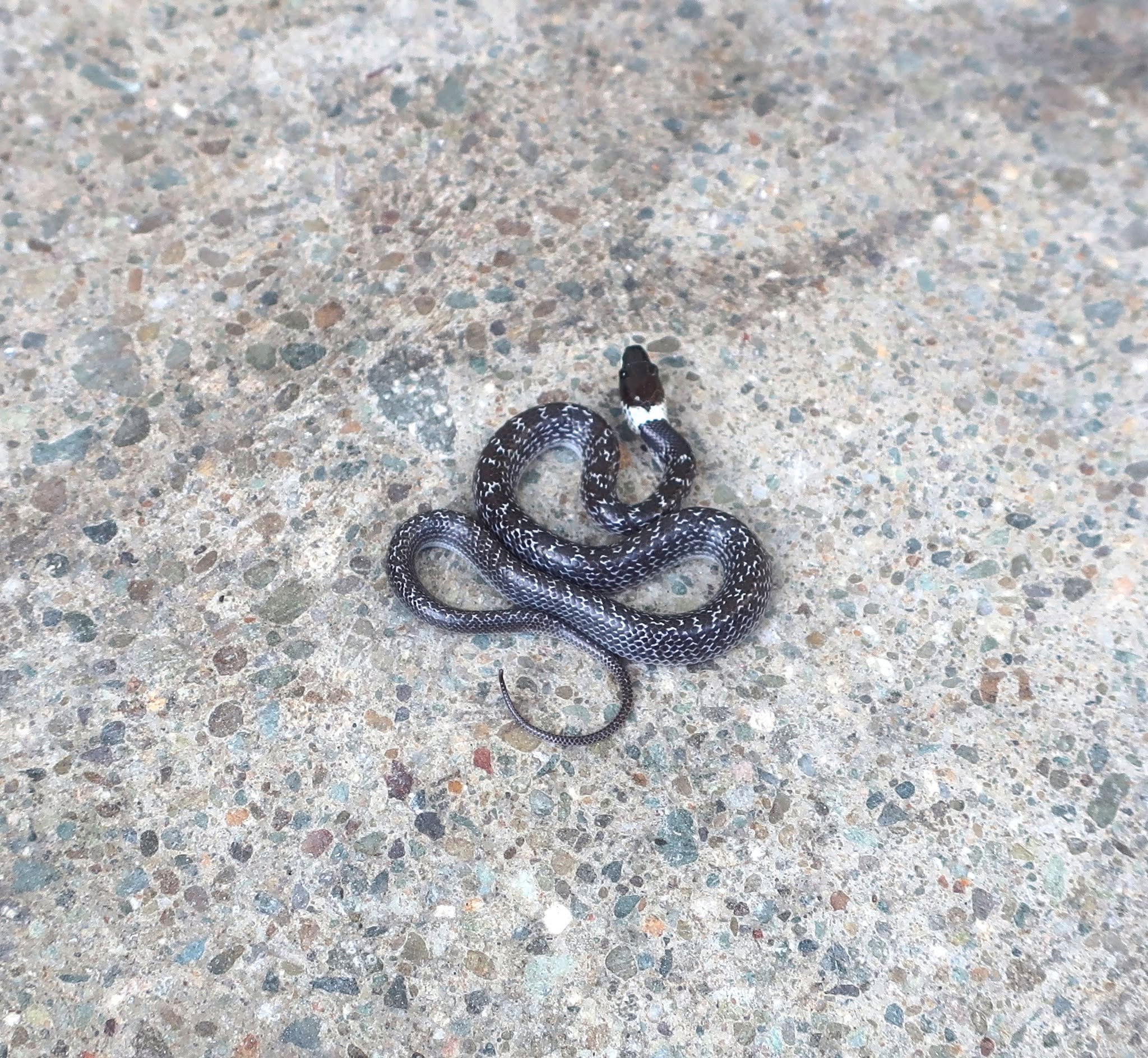
How to recognise one
Common Wolf Snakes are slender and small compared to most other snakes people report, rarely thick around the body even as adults. Colouring runs from dark brown to near-black, usually broken up by fine white or cream speckling and, in younger animals, distinct pale crossbands. Older individuals tend to lose the crisp banding and settle into an overall speckled or mottled look, which is part of why two photos of the same species can look surprisingly different side by side.
The head is narrow and only slightly wider than the neck, without the flared hood a cobra can raise when threatened. That's one of the more reliable field differences: a banded snake with no hood and no ability to rear up and spread one is far more likely to be a wolf snake than a cobra, whatever the color pattern suggests in a quick glance.
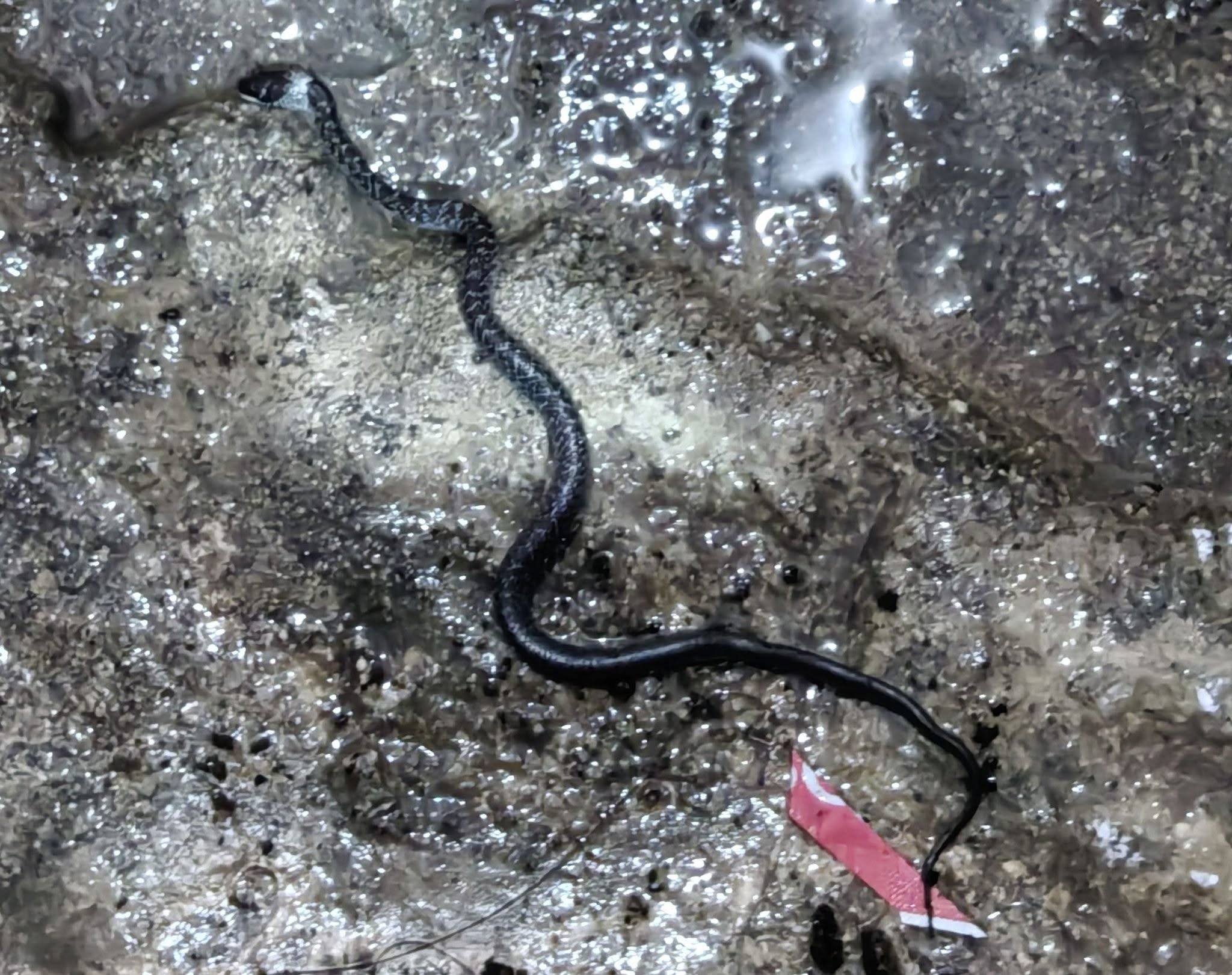
Why it gets mistaken for a cobra
Juvenile wolf snakes carry bold black-and-white banding, and that pattern is close enough to a young cobra's that it triggers a lot of understandable panic. Someone flips on an outdoor light, sees a banded snake move fast across the floor, and assumes the worst. It's a big part of why this species gets photographed and submitted for identification so often: people aren't just curious, they want to know if they need to worry.
They generally don't. Lycodon capucinus carries no venom of medical concern. It isn't harmless to handle carelessly, since like most snakes it will bite if grabbed or cornered, but a bite from a wolf snake is not the kind of emergency a cobra bite is. If a snake bite of any kind does happen, whatever the species, treat it as a medical emergency and get to a hospital immediately. Do not try to identify the snake by catching it first.
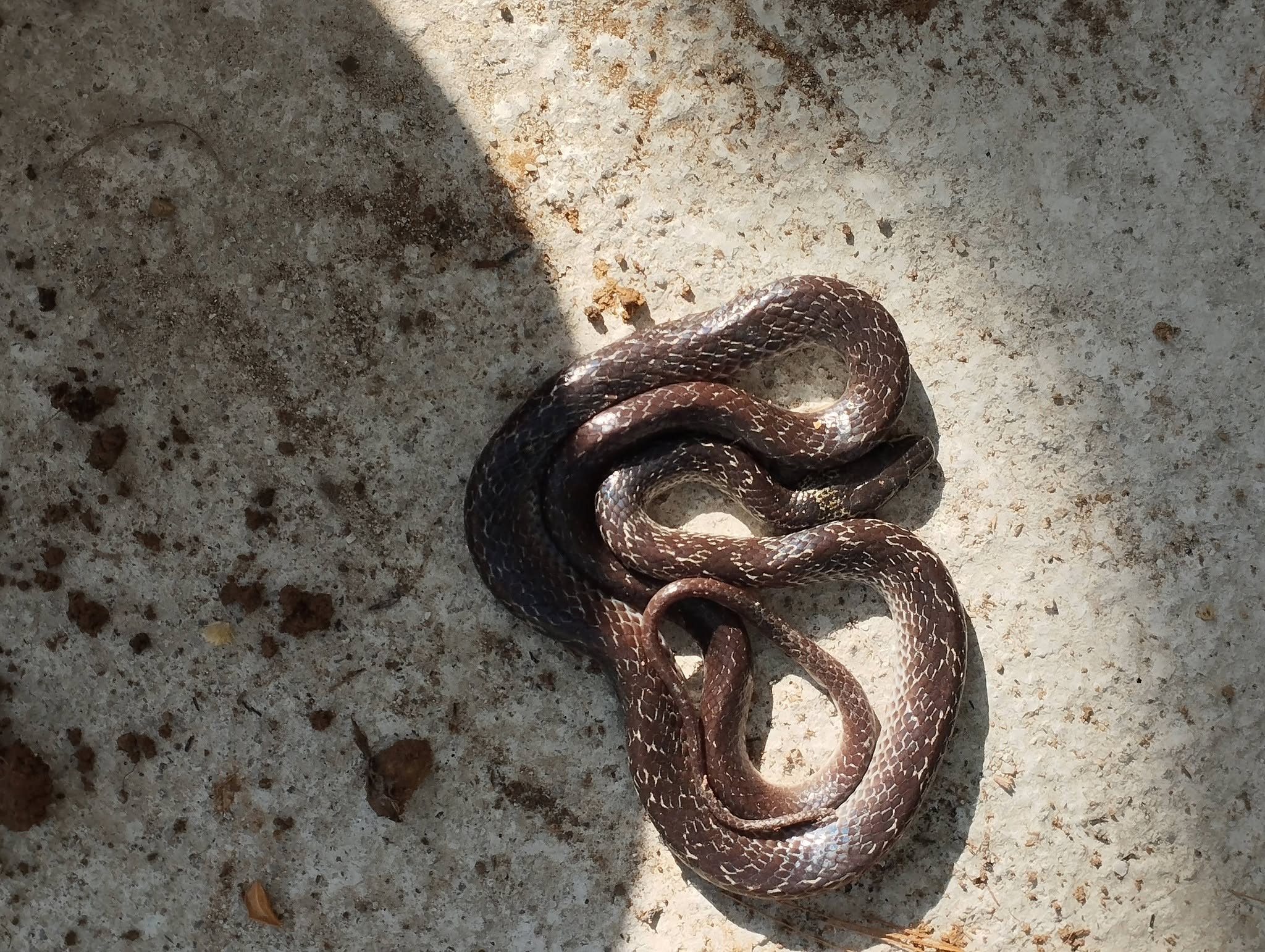
Habits: nocturnal, ground-dwelling, and drawn to lizards
Wolf snakes are active mostly at night. During the day they stay hidden in crevices, under debris, inside wall gaps, or tucked into leaf litter and wood piles, coming out after dark to hunt. Their main prey is house geckos and other small lizards, which explains why they show up so often near outdoor lights and eaves where geckos gather to feed on insects. Where the geckos go, a wolf snake sometimes follows.
They are not tree specialists or water snakes. Most sightings put them on the ground, on walls, or on paved surfaces like the concrete in several of the photos here, rather than up in vegetation.
Where reports come from, and what that count actually measures
Ranked by verified sightings, the leading provinces are:
- Cavite, 787 sightings
- Metro Manila, 535 sightings
- Laguna, 487 sightings
- Rizal, 474 sightings
- Pampanga, 415 sightings
- Batangas, 403 sightings
- Bulacan, 385 sightings
- Pangasinan, 332 sightings
That list overlaps heavily with the most populated part of the country, the provinces in and around Metro Manila. This is a record of sightings people photographed and had verified, not a wildlife survey, so a high count there mostly means more residents, more phones, and more people who know to send a photo in. A wolf snake almost certainly turns up just as often in provinces further down the list, or missing from it entirely; it just gets reported less.
If you find one
Leave it alone and move away. A Common Wolf Snake in your yard is doing what it does everywhere: hunting geckos and staying out of the way otherwise. It isn't a threat unless picked up or cornered, and even then the concern is a defensive bite, not venom.
If you want to see how a wolf snake compares to other frequently confused Philippine species, browse verified sightings on the Snakédex map, or test your own identification skills against real photos with Who's That Snake?.