Northern Philippine Cobra (Naja philippinensis): Where It's Found
The Northern Philippine Cobra (Naja philippinensis) is a highly venomous elapid found only in the Philippines, mainly across Luzon. On Snakédex it has 3,180 verified sightings from 37 provinces, with the most reports from Pangasinan (314), Nueva Ecija (277), Cavite (227), Bulacan (199) and Isabela (189). It is identified by a hood it can spread when threatened, and any suspected bite is a medical emergency requiring immediate hospital care, not home treatment.
A cobra with a narrow home range and a wide reputation
The Northern Philippine Cobra, Naja philippinensis, has 3,180 verified sightings in the Snakédex dataset, spread across 37 provinces, almost entirely on Luzon. That is about 6% of every sighting logged on the whole platform, a large share for a single species out of the dozens tracked.
It is endemic to the Philippines. Naja philippinensis exists nowhere else, part of the family Elapidae, the group of front-fanged venomous snakes that also includes coral snakes and kraits elsewhere in the world.
Why Pangasinan and Nueva Ecija dominate the reports
Pangasinan leads with 314 recorded sightings, followed by Nueva Ecija with 277, Cavite with 227, Bulacan with 199, and Isabela with 189. Laguna, Pampanga, and Camarines Sur round out the rest of the top eight, each still in triple digits.
Those numbers describe reporting, not a population count. Pangasinan and Nueva Ecija are heavily farmed lowland provinces with a lot of people working fields and living close to irrigation canals, exactly the kind of edge habitat this species uses. A high count there means both things at once: people and cobras share that ground often, and people in those provinces photograph and report what they see. A province with zero sightings on Snakédex is not necessarily a province without cobras, it may just be a province with fewer people submitting photos.
What it looks like
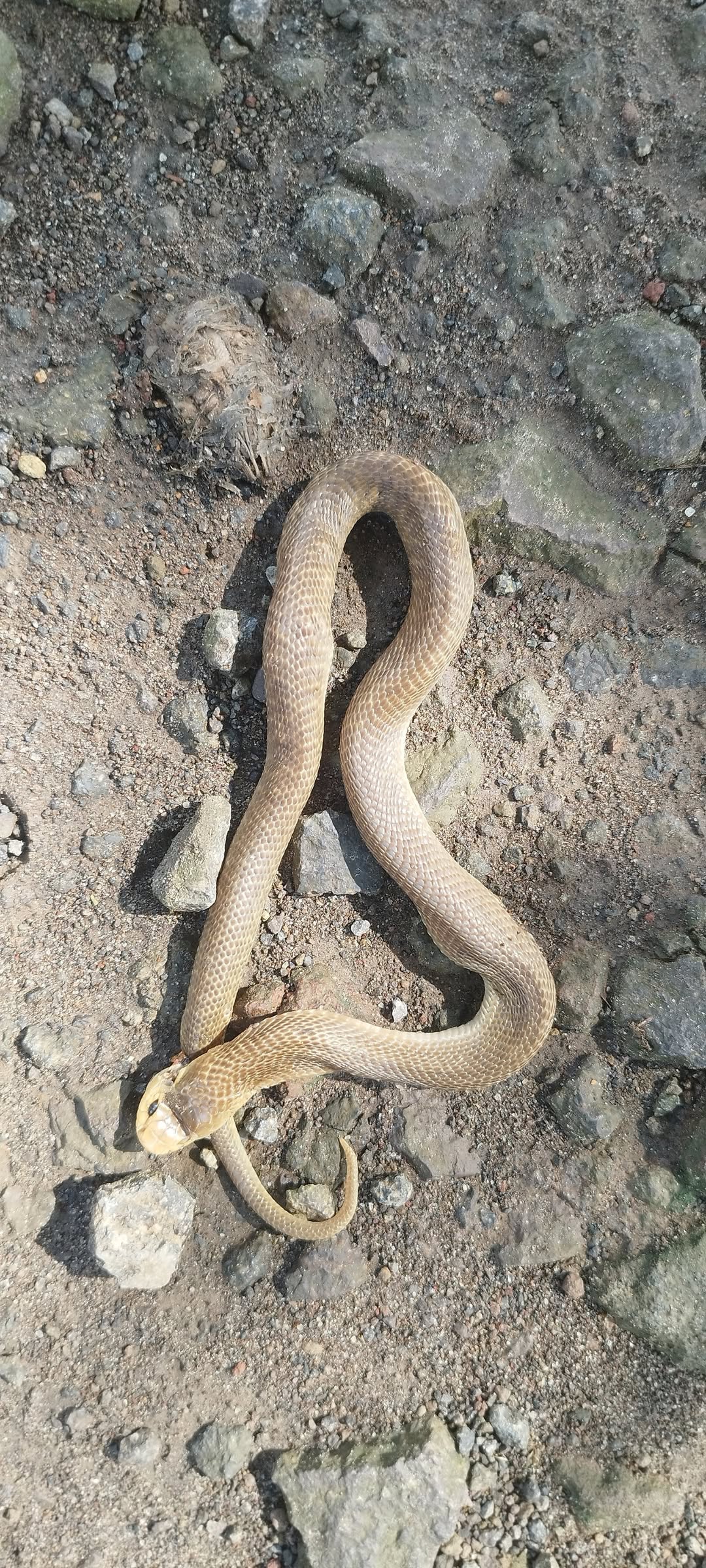
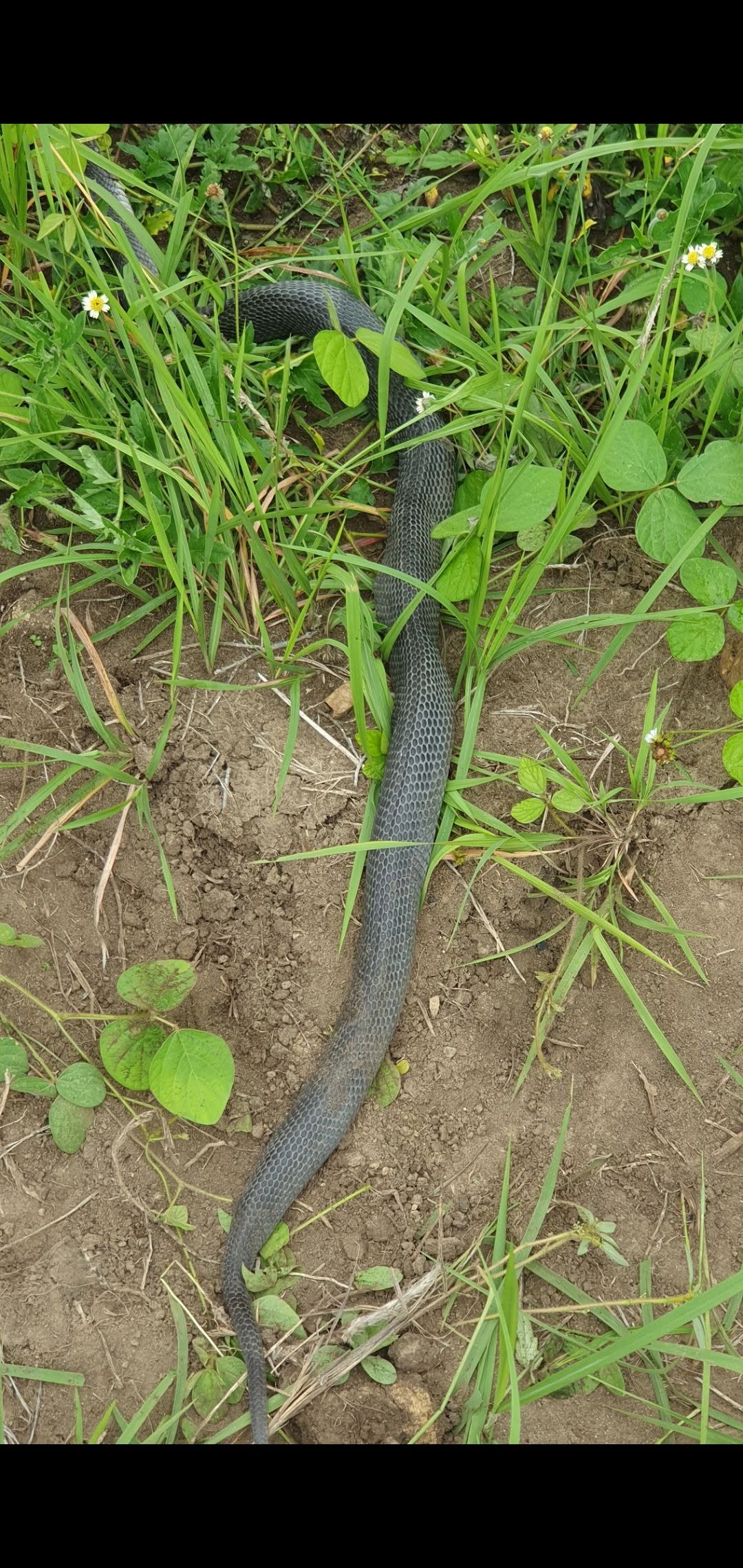
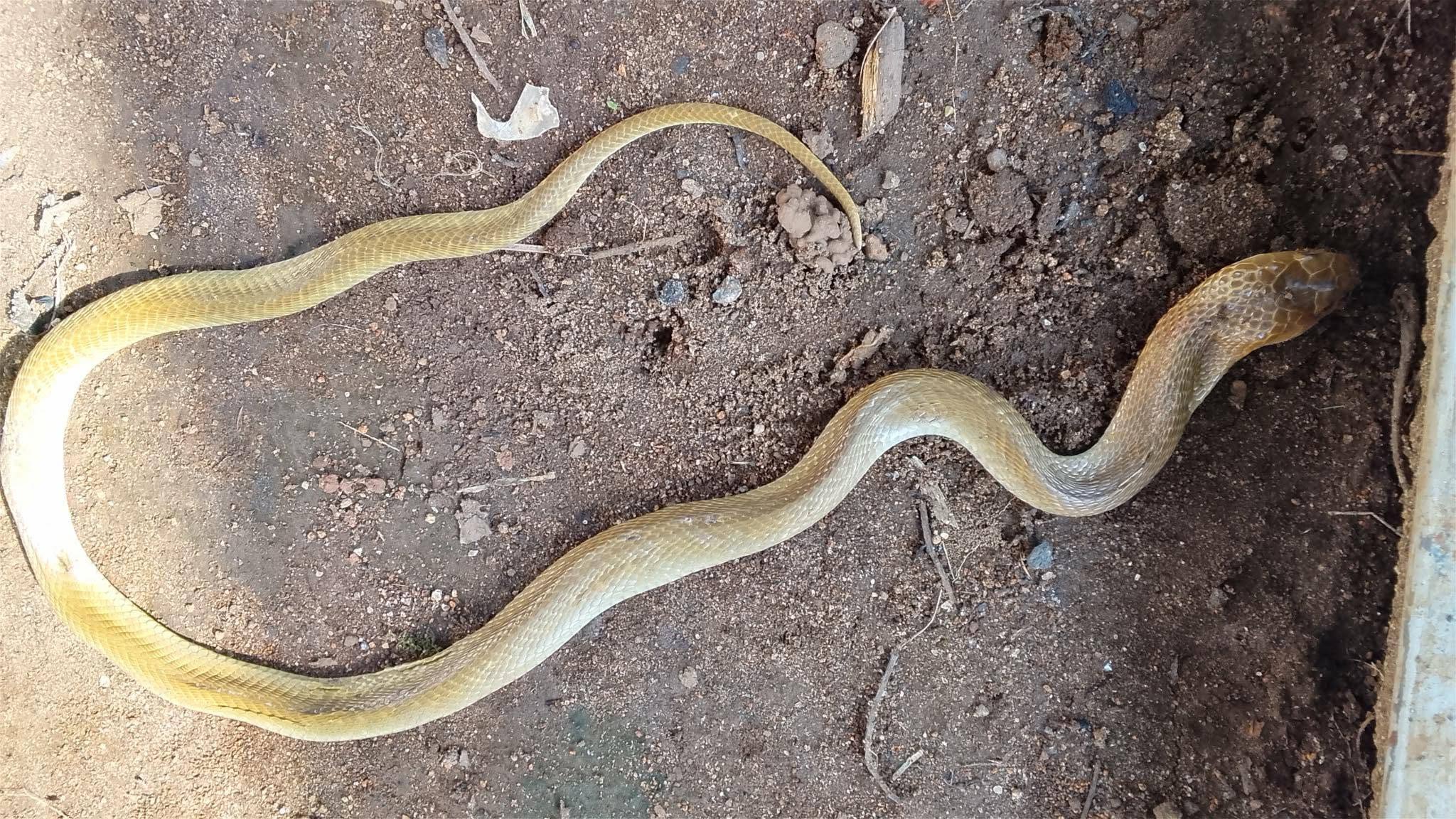
Northern Philippine Cobras vary a lot in colour, which trips up a lot of identification attempts. Some individuals run pale tan or straw yellow, others are a uniform dark grey that reads as almost black in low light. What stays consistent is the hood: like other true cobras, this species can flare the skin behind its neck into a broad hood when it feels threatened, spread out flat and wide rather than the loose flattening some non-venomous snakes manage. Most of the time, moving or at rest, the hood stays folded and the snake looks like an ordinary thick-bodied, smooth-scaled snake.
The head is only a little wider than the neck when the hood is down, and the eyes have round pupils, active in daylight as often as at dusk.
How it behaves around people
Cobras generally prefer to avoid confrontation. Given the option, a Northern Philippine Cobra will move away from a person rather than toward one. It raises its hood and may hiss loudly as a warning when it feels cornered or surprised at close range, a signal meant to make itself look bigger and scarier, not an announcement of an imminent attack. It hunts rats, frogs, and other small vertebrates, which is exactly what draws it into ricefields, irrigation ditches, and the storage areas around houses and barns where rodents gather.
Why a bite needs a hospital, not a home remedy
This species carries a highly venomous, medically significant bite. If you or someone with you is bitten, or even suspects a bite, treat it as a medical emergency and get to a hospital immediately. Do not wait to see if symptoms appear, do not attempt to treat it yourself, and do not try to catch or kill the snake to identify it, a photo from a safe distance is enough if you need one at all.
The far better outcome is not needing a hospital trip in the first place. If you see one of these cobras, back away slowly and give it space to leave on its own. Never try to pick it up, pin it down, or corner it against a wall, most bites happen at the moment someone tries to move or kill a snake rather than simply leave it alone.
Checking what has been seen near you
Snakédex maps every verified sighting that comes in from the community, so if you want to see whether Northern Philippine Cobras have been reported around your own province, the map is the fastest way to check. If you'd rather test your identification skills first, from cobras down to the similar-looking wolf snakes people sometimes confuse them for, the identification game runs through real submitted photos.