Paradise Tree Snake (Chrysopelea paradisi): Where It Lives and How to Recognise It
The Paradise Tree Snake (Chrysopelea paradisi) is a slender, rear-fanged colubrid found across the Philippines and the wider Southeast Asia region. It is mildly venomous and not endemic to the Philippines, and it is known for gliding between trees by flattening its body. Snakedex has logged 2,961 verified sightings of the species across 78 provinces, led by Cavite, Batangas, Cebu, Laguna, and Davao del Sur. Any suspected bite from this or any snake should be treated as a medical emergency requiring immediate hospital care.
A snake that glides instead of falls
Most snakes people find in a garden are on the ground. The Paradise Tree Snake, Chrysopelea paradisi, is usually up above it, moving through branches and shrubs, and if it needs to cross open space it does something almost no other snake does: it jumps and glides. Snakédex has 2,961 verified sightings of the species logged so far, spread across 78 provinces, out of just under 50,000 sightings in the whole dataset. It is not an endemic Philippine species; the same snake, or something very close to it, ranges across much of Southeast Asia.
How the gliding actually works
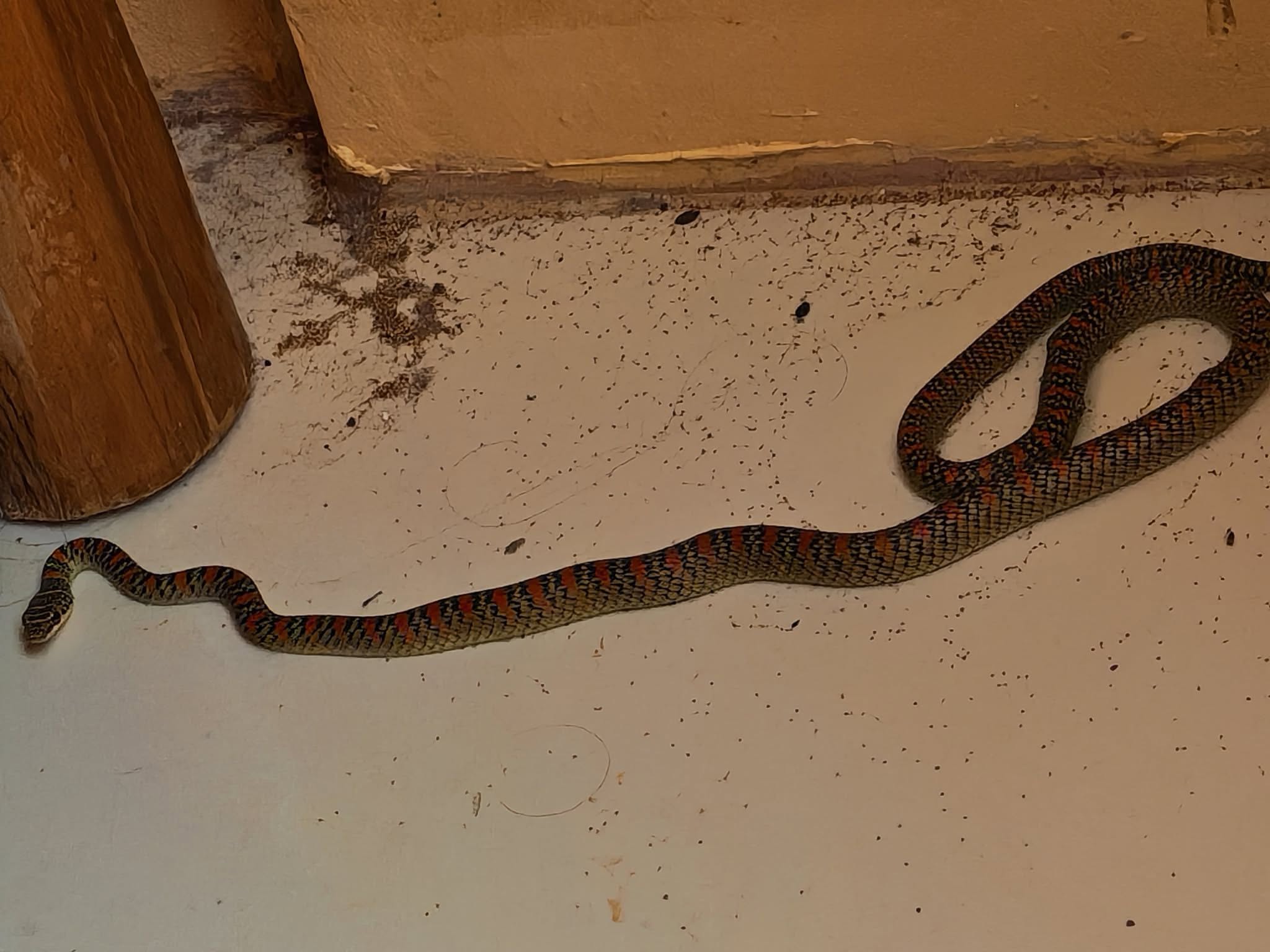
Chrysopelea paradisi belongs to a small group of colubrids nicknamed "flying snakes," and the name oversells it a little. There is no wing, no lift in the way a glider has lift. What it does is launch itself from a branch, suck its belly inward, and flatten its round body into a wide, concave shape from head to tail. Combined with a rapid side-to-side undulation in midair, that flattened shape slows the fall enough to turn a straight drop into a controlled, angled glide. It can cross several meters of open air this way, enough to move from one tree to the next without touching the ground at all.
This is a hunting and escape adaptation, not a party trick. A snake that can glide away from a branch has an easier time avoiding predators and covering ground in a forest canopy where climbing back down and up again would cost time and energy.
What it looks like in the hand or in a photo
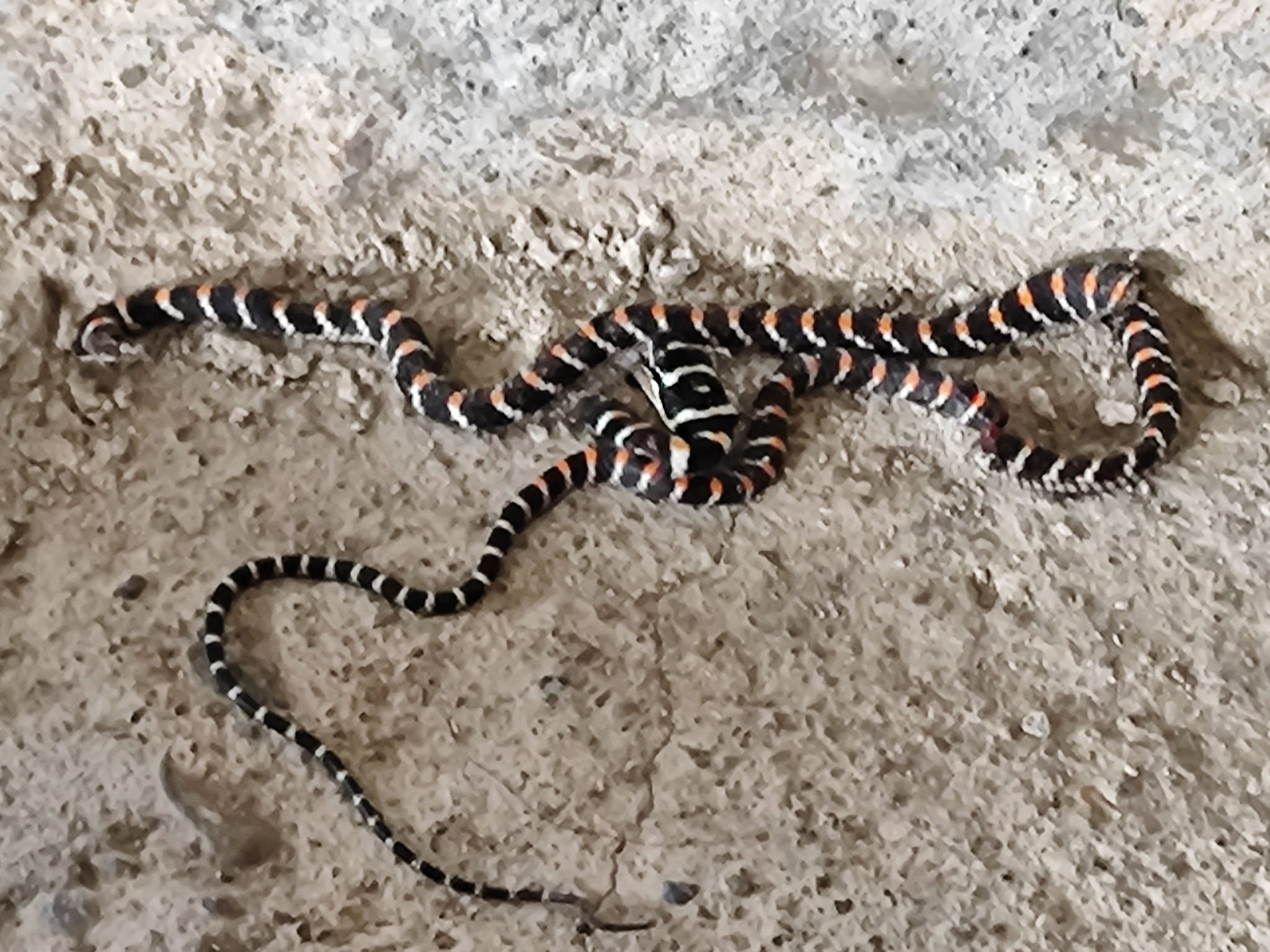
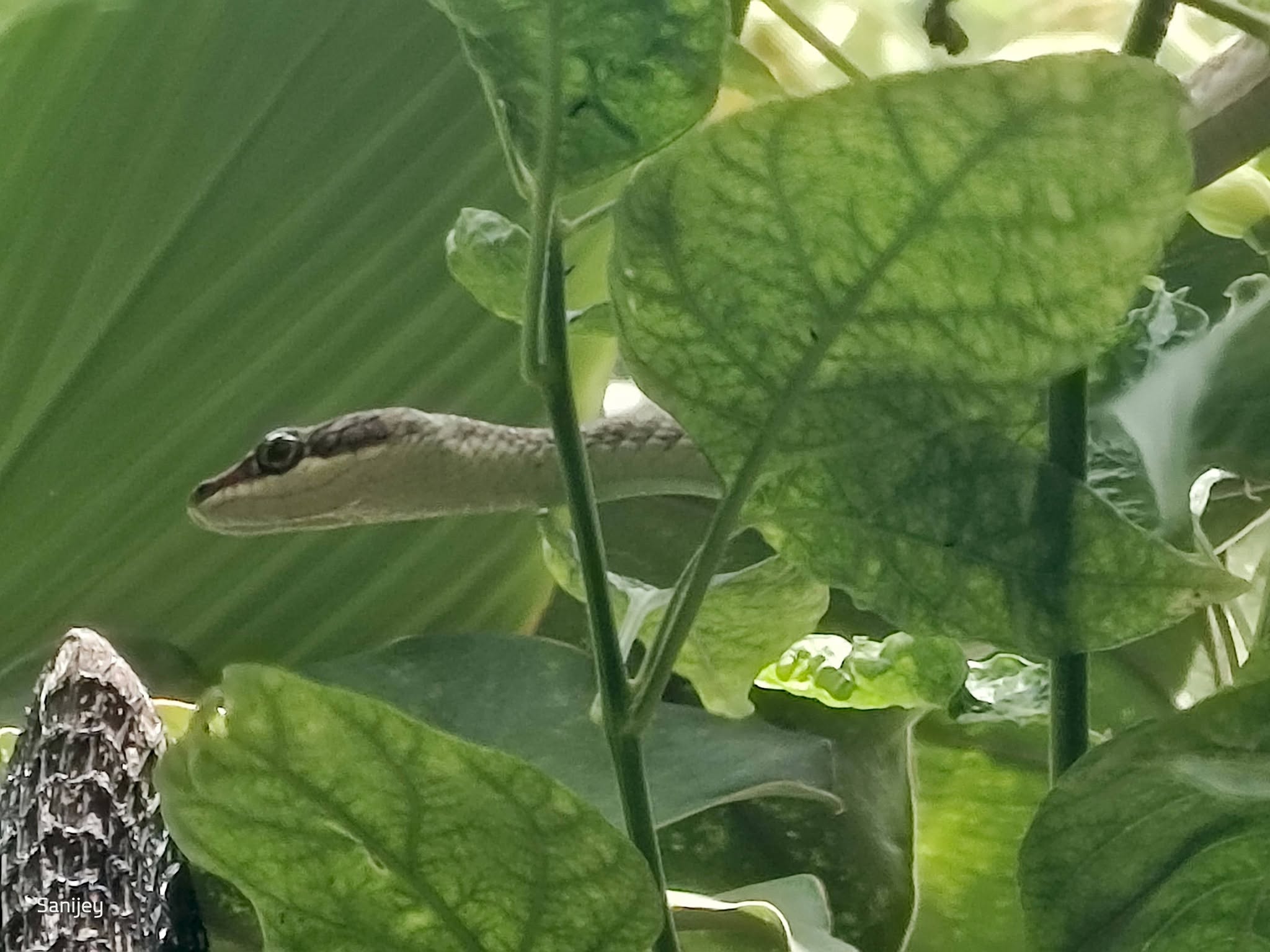
Body pattern varies between individuals, which shows in the photos here. Some are banded in black and vivid orange with fine white edging, others carry a narrower, more evenly spaced black-and-white pattern with only thin orange accents. What stays consistent is the build: a long, slender body, a head barely wider than the neck, and large eyes suited to a snake that is active by day and needs to judge distance before it jumps.
Is it dangerous to people
Chrysopelea paradisi is mildly venomous. It is rear-fanged, meaning its venom-delivering teeth sit toward the back of the upper jaw rather than at the front like a viper's or a cobra's, and it has to work a bite into place rather than strike and release. That is a different venom system than the front-fanged species most people worry about, and this snake is not considered aggressive toward people; it would rather glide away than confront anything the size of a human.
None of that is medical advice, and it is not a reason to relax around a snake bite. Any bite that breaks skin, from this species or any other, needs a hospital visit right away. Do not wait to see if symptoms appear and do not try to catch or kill the snake to identify it. If you see a Paradise Tree Snake in a tree or a garden, the correct response is the same as for any snake: leave it alone and back away.
Where it has been seen, and what that map shows
Ranked by verified sightings, the leading provinces on Snakédex are:
- Cavite, 173 sightings
- Batangas, 152 sightings
- Cebu, 146 sightings
- Laguna, 146 sightings
- Davao del Sur, 139 sightings
- Quezon, 131 sightings
- Pangasinan, 128 sightings
- Iloilo, 92 sightings
That list spans Luzon, the Visayas, and Mindanao, which fits a snake that is not endemic and not tied to one island group. It is a record of sightings people photographed and got verified, not a population survey, so the ranking mixes two things together: how common the snake actually is in a given province, and how many people there are nearby with a phone and a reason to send in a photo. A province near the bottom of this list, or missing from it, is not necessarily a province without paradise tree snakes.
Where to see more sightings
Every verified Paradise Tree Snake report on Snakédex, along with every other species in the dataset, is plotted on the live map. If you would rather test what you already know, Who's That Snake? runs identification rounds against real submitted photos, tree-dwelling species included.