Snakes of Laguna: 26 Species in the Sighting Record
Snakédex has logged 2,415 snake sightings in Laguna, of which 1,407 have been verified to a species, covering 26 different kinds. The most reported is the non-venomous common wolf snake, Lycodon capucinus, with 487 sightings, followed by the endemic Luzon brown ratsnake at 218 and the highly venomous Northern Philippine cobra, Naja philippinensis, at 176. Of verified sightings, about 68% are non-venomous, 15% highly venomous, 15% mildly venomous, and 2% venomous.
How many snakes has Laguna recorded
Laguna has 2,415 snake sightings logged in Snakédex, and 1,407 of those have been verified down to a specific species. Between them, the verified records cover 26 different species, from a python that can top the size charts to a blind snake barely thicker than a pencil.
That is a sizeable list for one province, but it is a photo archive built by whoever happened to have a phone out, not a wildlife survey. Laguna sits along a heavily built-up corridor south of Metro Manila, with subdivisions, resorts, and farmland pressed close together around Laguna de Bay. More people living near that mix of habitat means more snakes get photographed, which is a big part of why the count runs this high.
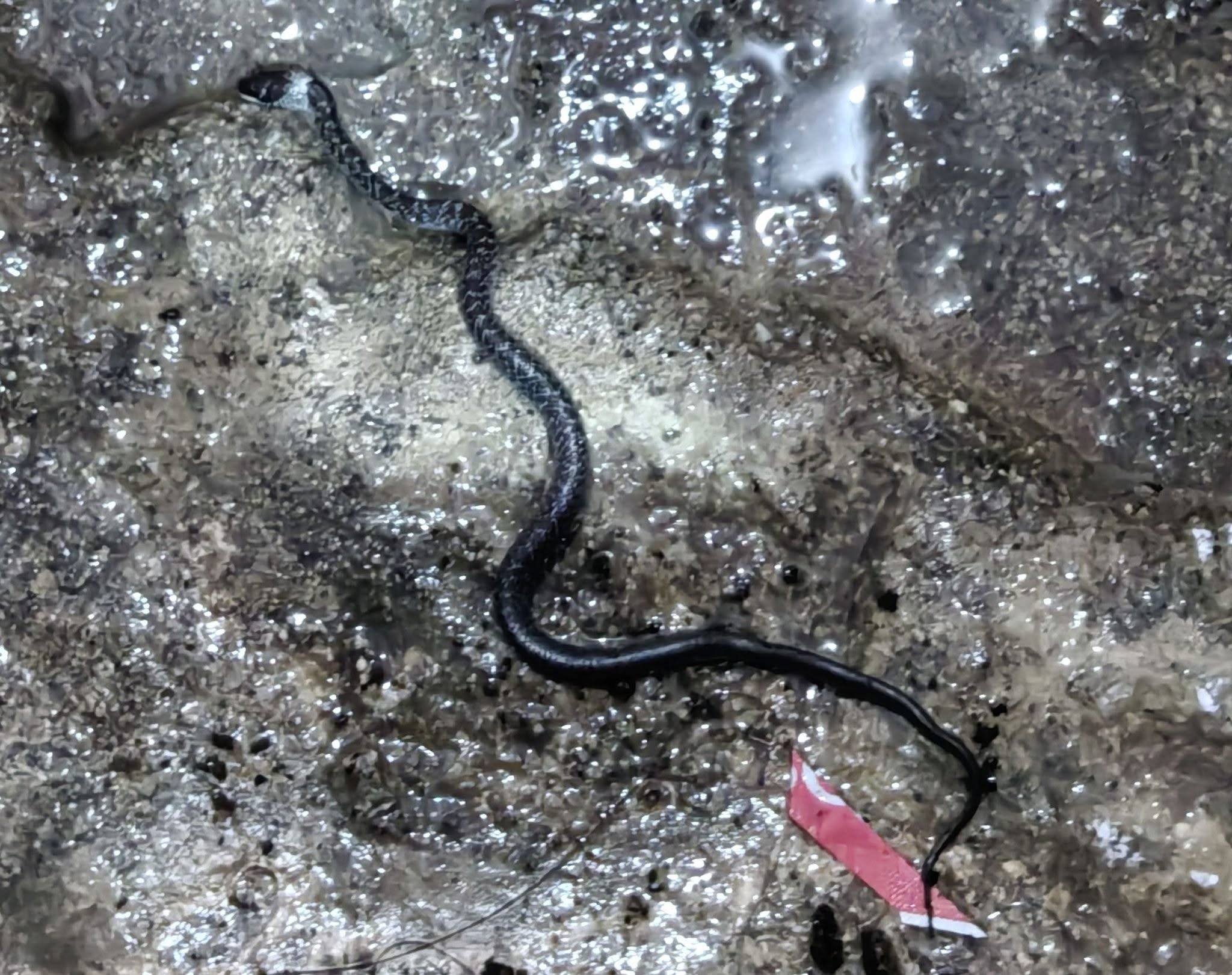
The common wolf snake is Laguna's most reported species
One species shows up far more than any other in Laguna's record: the common wolf snake, Lycodon capucinus, with 487 verified sightings, close to a third of every verified sighting in the province. It is non-venomous and turns up almost anywhere people live, wall gaps, woodpiles, garden beds, hunting geckos and small lizards at night. Its dark, banded juveniles are frequently mistaken for young cobras, which is likely part of why it gets photographed and reported so often.
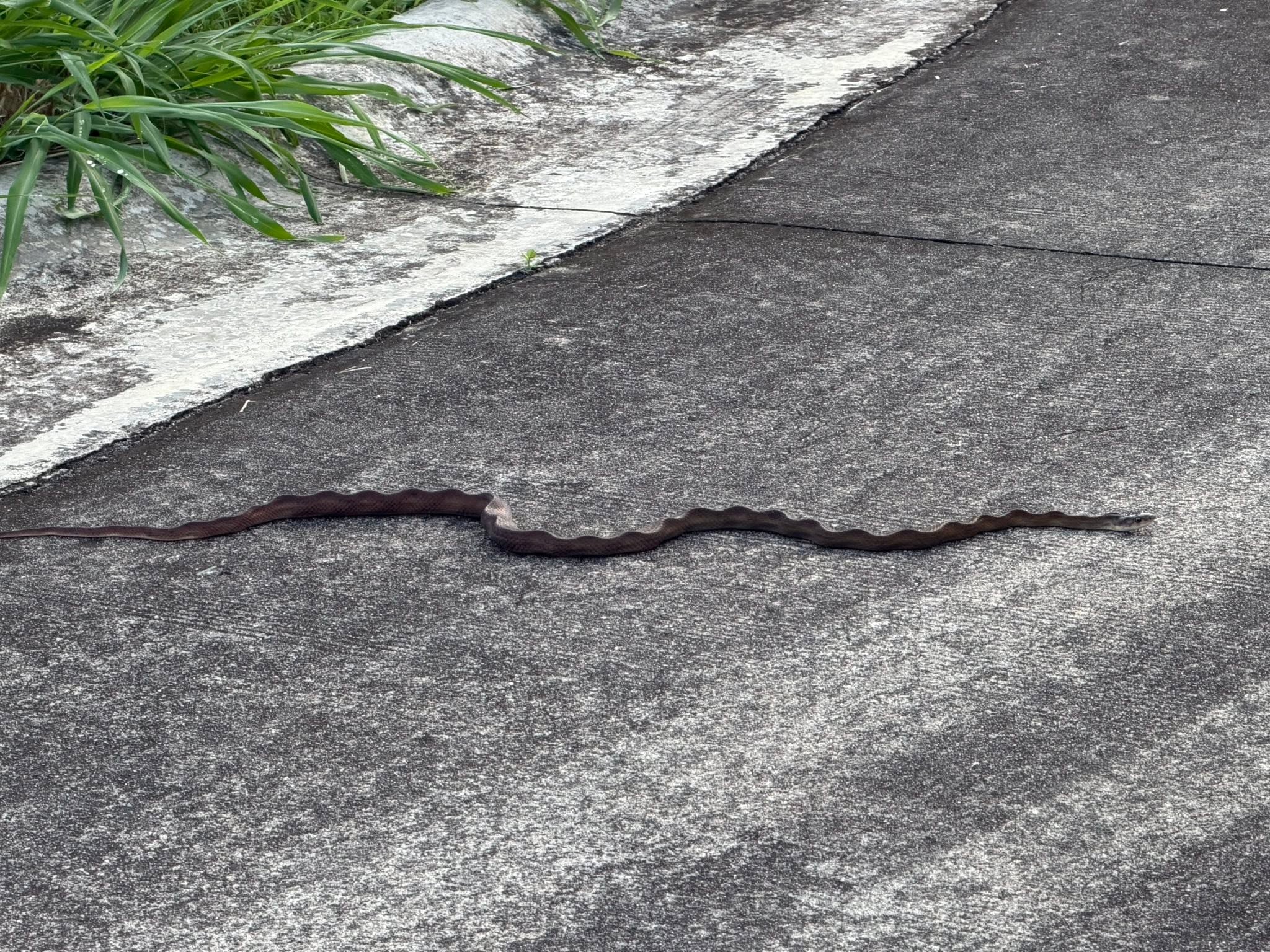
Behind it comes the Luzon brown ratsnake, Coelognathus erythrurus manillensis, with 218 sightings and endemic to the Philippines. It is a long, fast-moving colubrid that will raise its foreparts and hiss loudly when startled, a bluff display rather than a real threat since it has no venom to back it up.
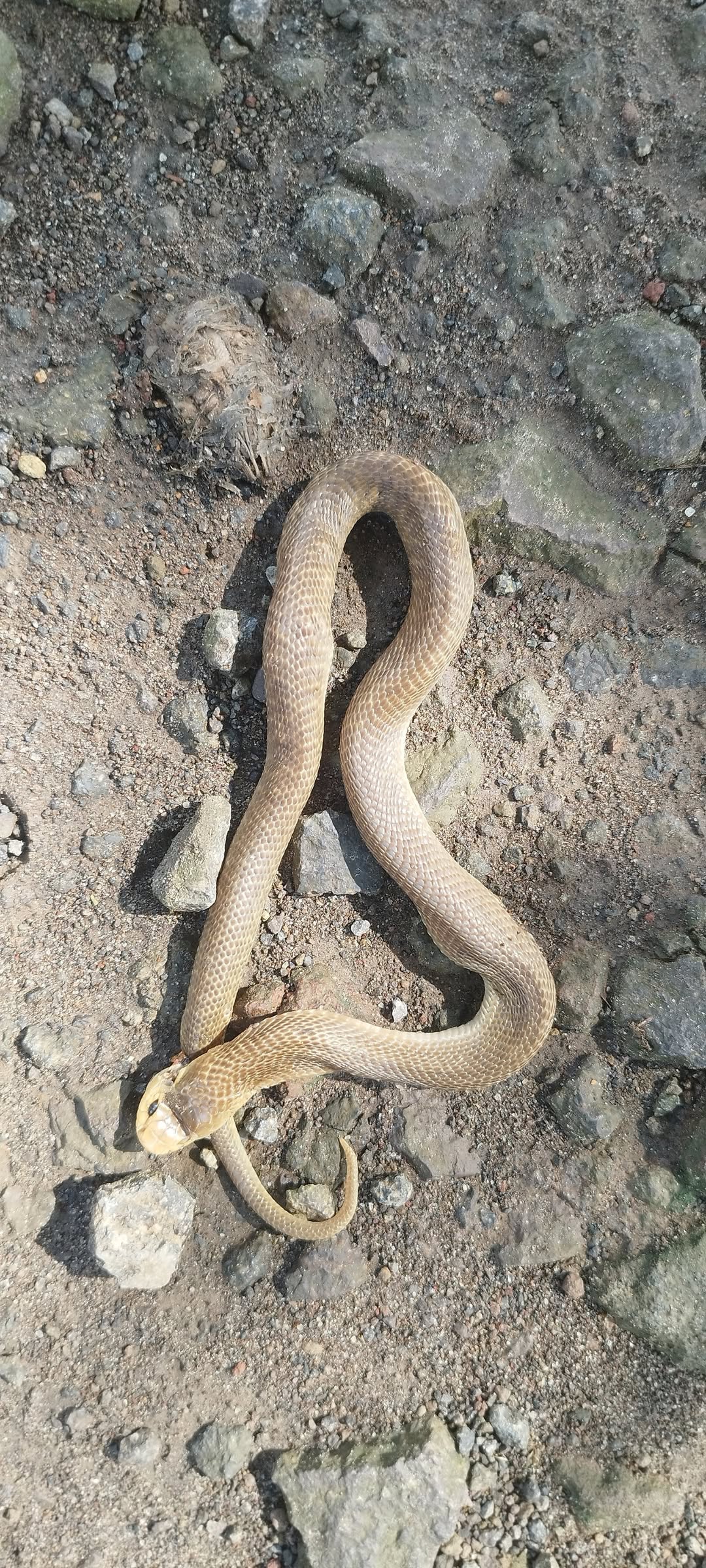
Is the Philippine cobra common in Laguna
The Northern Philippine cobra, Naja philippinensis, ranks third in the Laguna record with 176 verified sightings. It is endemic to the Philippines and belongs to family Elapidae, front-fanged snakes with venom that acts on the nervous system. A cornered cobra typically raises its foreparts and spreads its hood as a warning display before doing anything else, and it prefers to retreat if it has the room.
A much rarer relative also appears in the record: the Luzon king cobra, Ophiophagus salvatana, endemic and highly venomous, with 29 sightings. Both species are grouped as highly venomous in the data, together accounting for 205 of Laguna's 1,407 verified sightings.
None of this is advice on how to identify a bite or treat one. A suspected bite from a cobra, or from any snake, is a medical emergency. Get to a hospital immediately. Do not attempt first aid at home and do not try to catch, handle, or kill the snake responsible.
What else turns up in the mildly venomous and venomous categories
Laguna's mildly venomous sightings, 204 of the verified total, are led by the paradise tree snake, Chrysopelea paradisi, with 146 sightings. It is a rear-fanged glider that flattens its body into a shallow curve to move between tree branches, and it is not considered dangerous to people. The dog-toothed cat snake, Boiga cynodon, adds 35 sightings to the same category, an active nocturnal hunter of birds and small mammals.
The venomous category proper, separate from the highly venomous elapids, holds 34 sightings, most of them the Philippine barred coral snake, Hemibungarus calligaster, endemic, with 23 records. Coral snakes spend most of their time hidden underground or under leaf litter and are rarely seen out in the open, which makes each sighting worth a closer look.
The quieter species in Laguna's record
Past the top few names, the list runs long and thin. The Philippine dwarf snake, Calamaria gervaisii, endemic and non-venomous, has 56 sightings despite being small and mostly subterranean. The reticulated python, Malayopython reticulatus, has 53, the Luzon kukri snake, Oligodon ancorus, endemic, has 23, and the red-tailed green rat snake, Gonyosoma oxycephalum, has 21. Rounding out the group are the Philippine keelback, Tropidonophis spilogaster (20), the Luzon bronzeback, Dendrelaphis luzonensis (18), and the lined triangle-spotted snake, Cyclocorus lineatus (16), all endemic, all non-venomous, and all far less likely to cross a path than the wolf snake or the ratsnake.
The blind snake, Indotyphlops braminus, sits at 26 sightings despite being tiny and living almost entirely underground in soil and leaf litter. It is often mistaken for an earthworm and only gets noticed when digging turns one up.
What this list does and does not tell you
Read Laguna's numbers as a record of what got photographed and confirmed, not a count of what actually lives in the province. A wolf snake turning up in yards and under debris is going to get photographed far more than a dwarf snake that spends its life below the surface, regardless of which one is actually more numerous. The gap between 2,415 total submissions and 1,407 verified ones matters too: some photos are too blurry, too brief, or too similar to another species to confirm.
Most of the snakes on this list want nothing to do with people and will move off given the chance. If you find one in Laguna, venomous or not, the safest move is the same every time: leave it alone and step back rather than trying to catch or kill it.
To see exactly where these sightings were recorded across the province, open the Snakédex map. If you want to practice telling Laguna's most commonly confused species apart, try Who's That Snake?.